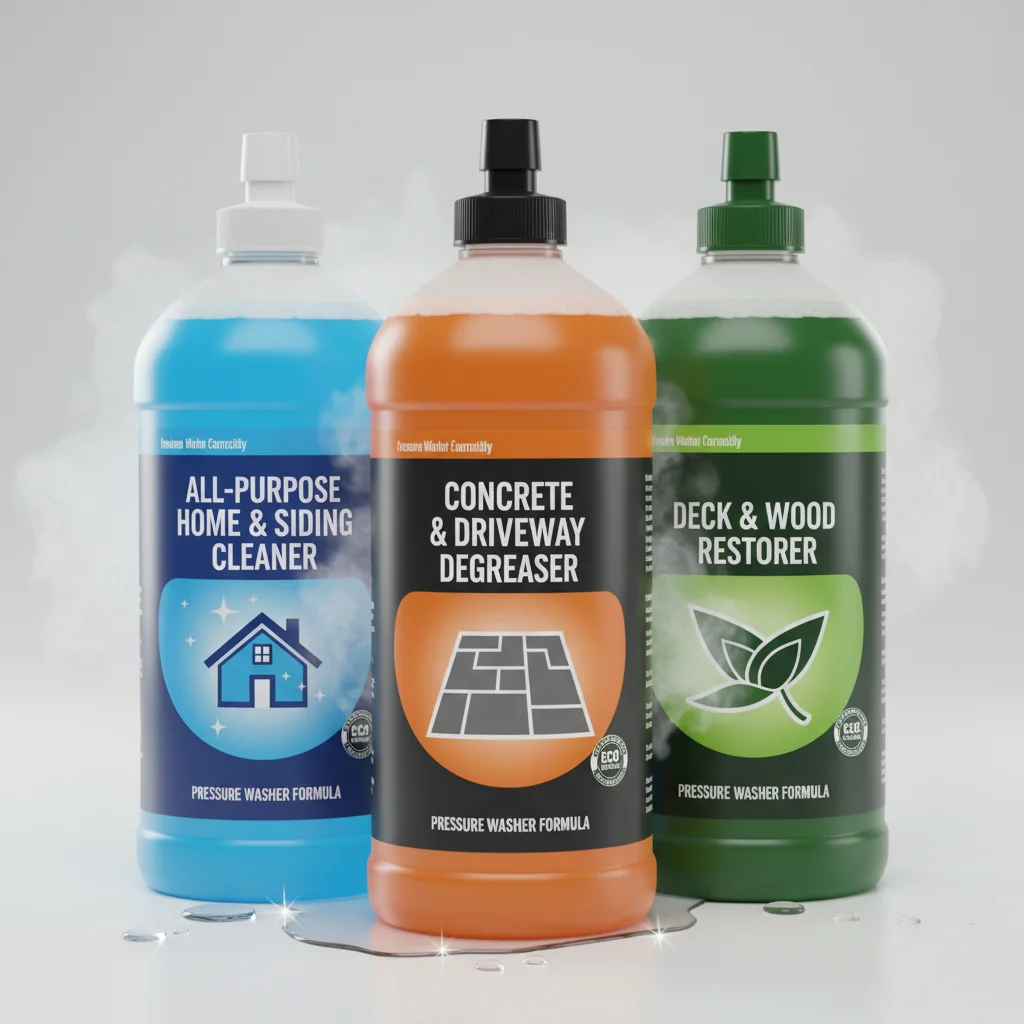
Choosing the right pressure washer detergent is crucial for achieving optimal cleaning results and protecting your surfaces. There are typically five main types of detergents designed for pressure washers: all-purpose cleaners, degreasers, mold and mildew removers, vehicle soaps, and wood cleaners. Each type is formulated with specific chemical compositions to tackle different kinds of dirt, grime, and stains effectively, ensuring a deeper clean than water alone.
Understanding Detergent Types and Their Uses
All-purpose pressure washer detergents are versatile and suitable for a wide range of outdoor cleaning tasks, including driveways, patios, and siding. They are generally pH-neutral or slightly alkaline, making them safe for most surfaces while effectively breaking down common dirt and light stains. For tougher grease and oil spots, especially on concrete or engine parts, a specialized degreaser is essential. These detergents contain stronger surfactants and often solvents that emulsify oil, allowing it to be easily rinsed away.
When dealing with organic growth like mold, mildew, and algae, a dedicated mold and mildew remover is your best bet. These formulations often contain bleach or other antimicrobial agents that kill spores and prevent regrowth, leaving surfaces clean and sanitized. For washing cars, boats, or RVs, vehicle-specific pressure washer soaps are designed to be gentle on paint and clear coats, preventing streaks and water spots while effectively removing road film and bug splatters. Lastly, wood cleaners are formulated to restore and brighten wooden decks, fences, and furniture, removing graying, dirt, and mildew without damaging the wood fibers.
Factors to Consider When Selecting Detergent
Several factors should influence your detergent choice. First, consider the surface you’re cleaning. Using a harsh degreaser on painted surfaces could strip the paint, while an all-purpose cleaner might not be strong enough for heavy oil stains. Second, assess the type of stain or dirt you’re targeting. Is it general grime, stubborn grease, or pervasive mold? Matching the detergent to the contaminant ensures maximum efficacy. Third, check your pressure washer’s compatibility. Some pressure washers have integrated detergent tanks, while others require a separate siphon tube or downstream injector. Always ensure the detergent is safe for your machine and won’t cause corrosion or damage to internal components.
- Always read the detergent label for specific instructions and safety precautions.
- Test the detergent on an inconspicuous area first to ensure compatibility with the surface.
- Dilute concentrated detergents according to the manufacturer’s recommendations.
- Wear appropriate personal protective equipment, such as gloves and eye protection.
- Rinse surfaces thoroughly after applying detergent to prevent residue buildup.
Application Techniques for Optimal Cleaning
|
Our Picks for the Best Pressure Washer in 2026
As an Amazon Associate I earn from qualifying purchases.
|
||
| Num | Product | Action |
|---|---|---|
| 1 | Westinghouse ePX3050 Electric Pressure Washer, 2100 Max PSI 1.76 Max GPM with Foam Cannon and Turbo Nozzle, for Cars/Fences/Driveways/Home/Patios |

|
| 2 | Pressure Washer, Portable Power Washer, 4 Quick Connect Nozzles, High Pressure Cleaning Machine for Car Fence Driveway Patio Washing and More |
|
| 3 | Westinghouse ePX3500 Electric Pressure Washer, 2500 Max PSI 1.76 Max GPM with Anti-Tipping Technology, Onboard Soap Tank, Pro-Style Steel Wand, 5-Nozzle Set, for Cars/Fences/Driveways/Home/Patios |
|
| 4 | Electric Pressure Washer, 2.5 GPM Power Washer with Foam Cannon, Electric High Pressure Washer with 4 Quick Connect Nozzles for Cars, Driveways, Fences, Patios, Home Cleaning |
|
| 5 | Pressure Washer Power Washer with 4500MAX-PSI, 4 Nozzles, Foam Cannon for Cleaning Cars, Driveways, Patios(Green) |
|
| 6 | Pressure Washer, Power Washer with 4 Quick Connect Nozzles 1 Foam Cannon, Pressure Cleaning Machine for Cars/Fences/Driveways/Patios/Home Cleaning |
|
| 7 | LawnMaster Electric Pressure Washer with Detergent Bottle |
|
| 8 | Westinghouse ePX3100v Electric Pressure Washer, 2100 Max PSI 1.76 Max GPM, Built-in Carry Handle, Detachable Foam Cannon, Pro-Style Steel Wand, 3-Nozzle Set, for Cars/Fences/Driveways/Home/Patios |
|
| 9 | Pressure Washer -4800PSI Power Washer with 4 Quick Connect Nozzles, High Pressure Cleaning Machine with Foam Cannon for Car/Garage/Patio Home Cleaning |
|
| 10 | Westinghouse ePX3100 Electric Pressure Washer, 2300 Max PSI 1.76 Max GPM with Anti-Tipping Technology, Onboard Soap Tank, Pro-Style Steel Wand, 5-Nozzle Set, for Cars/Fences/Driveways/Home/Patios |
|
Proper application of pressure washer detergent is key to achieving the best results. Most detergents are designed to be applied at low pressure, allowing the cleaning agents to dwell on the surface and break down dirt before rinsing. Use a black soap nozzle or a dedicated detergent nozzle on your pressure washer to apply the solution evenly. Start from the bottom of the surface and work your way up to prevent streaking. Allow the detergent to sit for the recommended dwell time, typically 5-10 minutes, but do not let it dry on the surface.
After the dwell time, switch to a higher-pressure nozzle (e.g., green 25-degree or yellow 15-degree) and rinse the surface thoroughly, working from top to bottom. Ensure all detergent residue is removed to prevent streaks or damage. For heavily soiled areas, a second application or light scrubbing with a brush may be necessary before the final rinse. Always follow the specific instructions provided by the detergent manufacturer for the best and safest cleaning experience.
Eco-Friendly and Concentrated Detergent Options
For environmentally conscious users, many eco-friendly pressure washer detergents are available. These products are often biodegradable and free from harsh chemicals like phosphates and bleach, making them safer for plants, pets, and waterways. While they may not be as aggressive as conventional detergents for the toughest stains, they are highly effective for general cleaning and maintenance.
Concentrated detergents offer excellent value and reduce plastic waste. A small amount of concentrate can be diluted to produce a large volume of cleaning solution, making them economical for frequent use. Always follow the dilution ratios precisely to ensure the detergent performs as intended. Using too much concentrate can be wasteful and potentially harmful to surfaces, while too little may not provide adequate cleaning power.
Get our weekly buyer guide
Practical specs, not advice. Unsubscribe anytime.
