For optimal performance and longevity, pressure washer pump oil should be changed after the initial 30 to 50 hours of operation for new machines, and then every 50 to 100 hours or at least once a year for typical home use. This regular maintenance prevents premature wear, reduces friction, and dissipates heat within the pump, which is crucial for generating the high-pressure water stream that makes these tools effective for cleaning driveways, decks, vehicles, and siding.
Overview of Pressure Washer Pump Oil
Pressure washer pumps are the core of the machine, generating the high-pressure water stream. Internal components like pistons, valves, and bearings operate under immense stress and friction. Pump oil acts as a vital lubricant, reducing friction, dissipating heat, and preventing wear on these critical parts. Without proper lubrication, components would quickly overheat and seize, leading to irreversible damage and costly repairs.
Electric pressure washers, often for lighter domestic tasks, frequently feature sealed pumps that do not require oil changes. Conversely, gas-powered pressure washers, which offer higher pressure and flow for demanding jobs, almost always have pumps that require regular oil maintenance. These range from consumer models for occasional home use to robust commercial units for continuous heavy-duty operation. The fundamental need for pump lubrication in non-sealed systems remains constant for optimal function. For compare top pressure washer on this site.
Essential Guide to Pressure Washer Pump Oil Maintenance
Maintaining your pressure washer’s pump oil is critical for preserving its efficiency and extending its life. Understanding when and how to perform this maintenance is key to preventing common problems and ensuring your machine is always ready for action.
When to Change Pressure Washer Pump Oil
The frequency of pump oil changes varies based on usage and manufacturer guidelines. However, general principles and specific indicators can guide you:
- Initial Oil Change: For new pressure washers, perform the first pump oil change after the initial break-in period, typically between 30 to 50 hours of operation. This early change flushes out manufacturing sediments or metallic particles that accumulate during initial use, preventing premature wear and damage.
- Regular Oil Changes: After the initial break-in, change the pump oil every 50 to 100 hours of use or at least once a year for typical home use, whichever comes first. For intensive or commercial applications, guidelines suggest every 300 to 500 operational hours or quarterly maintenance. Always consult your pressure washer’s owner’s manual for specific recommendations.
- Signs the Oil Needs Changing: Beyond timed intervals, your pressure washer will show signs when its pump oil is degrading:
- Dark or Cloudy Oil: Fresh pump oil is clear or light amber. Dark, cloudy, or milky oil indicates contamination or degradation.
- Unusual Noises: Grinding, whining, or other unusual noises from the pump might signal inadequate lubrication.
- Reduced Performance: If your pressure washer’s power or pressure seems inconsistent, old oil could be a factor.
- Pump Running Hotter: Overheating is a clear sign of increased friction, often due to degraded or insufficient lubrication.
- Visible Contamination: The presence of visible particles or a milky appearance suggests oil contamination or water ingress.
Choosing the Right Pump Oil
|
Our Picks for the Best Pressure Washer in 2026
As an Amazon Associate I earn from qualifying purchases.
|
||
| Num | Product | Action |
|---|---|---|
| 1 | Westinghouse ePX3050 Electric Pressure Washer, 2100 Max PSI 1.76 Max GPM with Foam Cannon and Turbo Nozzle, for Cars/Fences/Driveways/Home/Patios |

|
| 2 | Westinghouse ePX3500 Electric Pressure Washer, 2500 Max PSI 1.76 Max GPM with Anti-Tipping Technology, Onboard Soap Tank, Pro-Style Steel Wand, 5-Nozzle Set, for Cars/Fences/Driveways/Home/Patios |
|
| 3 | Pressure Washer, Power Washer with 4 Quick Connect Nozzles 1 Foam Cannon, Pressure Cleaning Machine for Cars/Fences/Driveways/Patios/Home Cleaning |
|
| 4 | Electric Pressure Washer, 2.5 GPM Power Washer with Foam Cannon, Electric High Pressure Washer with 4 Quick Connect Nozzles for Cars, Driveways, Fences, Patios, Home Cleaning |
|
| 5 | Westinghouse ePX3100 Electric Pressure Washer, 2300 Max PSI 1.76 Max GPM with Anti-Tipping Technology, Onboard Soap Tank, Pro-Style Steel Wand, 5-Nozzle Set, for Cars/Fences/Driveways/Home/Patios |
|
| 6 | Pressure Washer -4800PSI Power Washer with 4 Quick Connect Nozzles, High Pressure Cleaning Machine with Foam Cannon for Car/Garage/Patio Home Cleaning |
|
| 7 | Westinghouse ePX3100v Electric Pressure Washer, 2100 Max PSI 1.76 Max GPM, Built-in Carry Handle, Detachable Foam Cannon, Pro-Style Steel Wand, 3-Nozzle Set, for Cars/Fences/Driveways/Home/Patios |
|
| 8 | LawnMaster Electric Pressure Washer with Detergent Bottle |
|
| 9 | Pressure Washer, Portable Power Washer, 4 Quick Connect Nozzles, High Pressure Cleaning Machine for Car Fence Driveway Patio Washing and More |
|
| 10 | Pressure Washer Power Washer with 4500MAX-PSI, 4 Nozzles, Foam Cannon for Cleaning Cars, Driveways, Patios(Green) |
|
Selecting the correct oil for your pressure washer’s pump is as important as changing it regularly. Using the wrong type of oil can lead to poor performance, premature wear, and even void your warranty.
- Consult Your Manual: Always refer to your pressure washer’s owner’s manual. It specifies the exact oil type, viscosity grade (e.g., SAE 30, 15W-40), and capacity required for your pump.
- Synthetic vs. Non-Synthetic Oil:
- Non-synthetic (conventional) oil is less expensive and suitable for light or occasional use, often requiring more frequent changes.
- Synthetic oil offers superior performance, especially in extreme temperatures, provides better lubrication, and can extend pump life. It’s recommended for heavy-duty, commercial, or year-round use and may allow for longer intervals, though manufacturer recommendations should still be followed.
- Detergent vs. Non-Detergent Oil: Most pressure washer pumps require non-detergent oil. Detergent oils contain additives that keep particles in suspension, which is detrimental to pump mechanisms where sediment needs to settle out. Non-detergent oil helps prevent rusting and foaming.
> “Understanding your pressure washer’s pump oil requirements is not merely a maintenance task; it’s an investment in the longevity and reliable performance of your equipment. The right oil at the right time can prevent a minor issue from becoming a major repair.” – ReviewMyPPC Admin, Pressure Washer Technician
Step-by-Step Guide to Changing Pump Oil
Changing pressure washer pump oil is a straightforward process that anyone can perform with a few basic tools.
-
Preparation:
- Ensure the pressure washer is off and disconnected from its power source (unplugged for electric, spark plug wire removed for gas models).
- Allow the machine to cool completely if recently used.
- Gather tools: an oil pan, a wrench for the drain plug, a funnel, clean rags, and the correct new pump oil.
-
Locate Drain and Fill Plugs:
- Identify the pump oil drain plug, usually at the bottom or side of the pump.
- Locate the oil fill plug and dipstick (if applicable), typically on the top or side of the pump housing.
-
Drain the Old Oil:
- Place the oil pan directly beneath the drain plug.
- Carefully remove the drain plug and allow all old oil to drain completely.
- Inspect the old oil for metal flakes or excessive cloudiness, indicating internal pump issues.
-
Replace Drain Plug:
- Once drained, clean the drain plug and its sealing washer (if present).
- Reinsert and tighten the drain plug securely, but do not overtighten.
-
Add New Oil:
- Using a funnel, slowly pour the new, recommended pump oil into the fill opening.
- Monitor the oil level using the dipstick or sight glass. Fill to the manufacturer’s indicated level, typically marked “full.” Do not overfill.
- Replace the fill plug securely.
-
Dispose of Old Oil:
- Properly dispose of the old pump oil at an approved recycling center. Never pour used oil down drains or onto the ground.
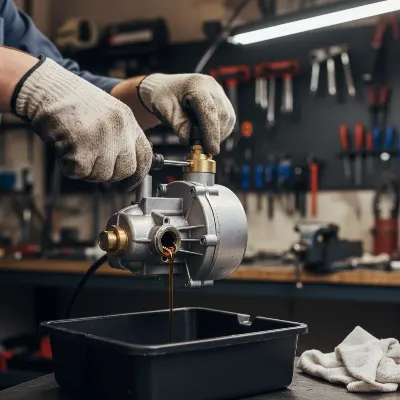 Technician performing pump oil change on a gas pressure washer, emphasizing proper maintenance for longevity.
Recognizing Common Pump Issues and Troubleshooting
Even with diligent maintenance, issues can arise. Knowing common problems and basic troubleshooting can save you time and money.
Common Problems and Symptoms
- Loss of Pressure: This can be caused by low oil levels, worn seals (often due to neglected oil), clogged nozzles, or air in the system.
- Pump Overheating: An excessively hot pump indicates high friction, often pointing to insufficient or degraded pump oil, or internal component wear.
- Leaking Oil: Visible oil leaks around the pump indicate failing seals or gaskets. Significant leaks require immediate attention.
- Unusual Noises: Grinding, squealing, or knocking sounds from the pump suggest internal component issues, possibly due to lack of lubrication or bearing wear.
- Pulsating Pressure: Inconsistent pressure output can signal issues with the unloader valve, air in the system, or internal pump wear.
Basic Troubleshooting Steps
- Check Oil Level and Quality: Always start here. Ensure the oil level is correct and appears clean. Top off if low; change if dirty.
- Inspect Hoses and Connections: Look for kinks, leaks, or loose connections in both the water supply and high-pressure hoses. Air ingress causes performance issues.
- Clean Nozzles and Filters: Clogged nozzles restrict water flow and pressure. Blocked water inlet filters reduce supply to the pump.
- Inspect the Unloader Valve: This valve regulates pressure; issues here can cause problems if it’s sticking or faulty.
- Consult Your Manual: For specific troubleshooting guides tailored to your model, always refer to your owner’s manual.
If basic troubleshooting doesn’t resolve the issue, consult a qualified service technician. Attempting complex pump repairs without expertise can lead to further damage.
Conclusion
Changing your pressure washer’s pump oil is a cornerstone of effective equipment maintenance. Adhering to manufacturer recommendations for oil type and change intervals, especially the critical initial change, significantly reduces the risk of premature wear and costly pump failures. Regularly inspecting the oil for signs of degradation and promptly addressing any unusual symptoms will ensure your pressure washer continues to operate at its peak, delivering the power and reliability you depend on for all your cleaning projects. Prioritize pump oil changes, and your pressure washer will reward you with years of efficient, powerful performance.
Frequently Asked Questions
Frequently Asked Questions
How often should I change the oil in my pressure washer pump?
For new pressure washers, change the pump oil after the first 30-50 hours of operation to remove manufacturing debris. Subsequently, for home use, change the oil every 50-100 hours or at least once a year. Commercial applications may require changes every 300-500 hours or quarterly, always following your specific model's owner's manual.
What kind of oil should I use in my pressure washer pump?
Always consult your pressure washer's owner's manual for the specific type and viscosity of oil required. Most gas-powered pressure washer pumps use non-detergent oil, typically an SAE 30 or 15W-40, designed for pumps. Using the incorrect oil can cause pump damage and void your warranty.
What are the consequences of not changing my pressure washer pump oil?
Neglecting pump oil changes leads to increased friction, overheating, and premature wear of internal components, ultimately causing pump failure. This results in reduced cleaning performance, expensive repairs, and a significantly shortened lifespan for your pressure washer.
How can I tell if my pressure washer pump oil needs to be changed?
Key indicators that your pump oil needs changing include the oil appearing dark, cloudy, or milky, unusual grinding or whining noises from the pump, a noticeable reduction in pressure, or the pump running hotter than normal. These signs suggest the oil is degraded, contaminated, or insufficient.
Do all electric pressure washers require pump oil changes?
No, many electric pressure washers feature sealed pumps that do not require oil changes. However, some heavy-duty electric models may have pumps that do need oil maintenance. It is crucial to check your specific model's owner's manual to determine if pump oil maintenance is necessary.
How to Change Pressure Washer Pump Oil
Changing your pressure washer's pump oil is a simple maintenance task that extends the life and performance of your equipment. Follow these steps to ensure proper lubrication.
Ensure the pressure washer is turned off and disconnected from its power source. Allow the machine to cool completely if it has been recently used. Gather an oil pan, a wrench for the drain plug, a funnel, clean rags, and the correct type and amount of new pump oil.
Identify the pump oil drain plug, typically found at the bottom or side of the pump. Locate the oil fill plug and dipstick (if applicable), usually on the top or side of the pump housing. Familiarize yourself with these locations before proceeding.
Place the oil pan directly beneath the drain plug. Carefully remove the drain plug and allow all the old oil to drain completely into the pan. This process may take several minutes. Inspect the drained oil for any metal flakes or excessive cloudiness, which could indicate internal pump issues.
Once the oil has fully drained, clean and reinsert the drain plug, tightening it securely without overtightening. Using a funnel, slowly pour the new, recommended pump oil into the fill opening. Monitor the oil level using the dipstick or sight glass, filling to the manufacturer's specified 'full' level without overfilling. Securely replace the fill plug.
Properly dispose of the old pump oil at an approved recycling center. Never pour used oil down drains, onto the ground, or into regular trash. Environmental regulations require responsible disposal of used motor oils.
Get our weekly buyer guide
Practical specs, not advice. Unsubscribe anytime.

I’ve always been pretty good about changing the oil in my car, but I totally overlooked my pressure washer until I read this. The tip about changing it after the initial 30-50 hours for new machines is a game-changer. I just did mine and it was surprisingly easy. My driveway looks amazing after using it, and I want to keep it running strong for years.
This was super helpful! I’ve had my pressure washer for about a year and a half and honestly never thought about the pump oil. The guide on changing it every 50 to 100 hours or yearly makes a lot of sense. I used it to clean my deck last weekend and it worked great, so I’m glad I caught this before any issues popped up. Definitely adding this to my regular maintenance routine.
Good info on why pump oil is important for reducing friction and dissipating heat. I appreciate the detailed explanation. My only minor complaint is that I wish there was a quick link to recommended oil types or brands. It would save me an extra search. Still, it’s a solid reminder to keep up with this maintenance for cleaning my siding.
I just got a new pressure washer and was wondering about maintenance. This explained everything perfectly, especially the part about how crucial pump oil is for the internal components like pistons and bearings. I used it to clean my car and it did a fantastic job. I’m definitely going to follow the recommended oil change intervals to ensure its longevity.