Tired of battling stubborn dirt, grime, and mildew with a scrub brush and a garden hose? A powerful pressure washer can transform your cleaning routine, making quick work of even the most daunting tasks. Among the myriad options available, the Craftsman 3000 PSI Gas Pressure Washer stands out as a popular choice for homeowners seeking robust performance and reliability. But does it truly live up to its reputation? Let’s delve into what makes this machine a formidable ally in your cleaning arsenal and whether it’s the right fit for your needs.
Overview of Pressure Washers
Pressure washers are essential tools that utilize a high-pressure stream of water to remove loose paint, mold, grime, dust, mud, and dirt from surfaces and objects. They are significantly more effective and efficient than traditional cleaning methods, saving both time and effort. While various types exist, including electric models best suited for lighter tasks, gas-powered pressure washers like the Craftsman 3000 PSI are engineered for heavier-duty applications, offering greater portability and raw power without being tethered to an electrical outlet. These machines have evolved from industrial-only equipment to versatile tools widely used for residential and commercial purposes, from washing vehicles and cleaning decks to preparing surfaces for painting.
The Craftsman 3000 PSI Gas Pressure Washer: In-Depth Review
The Craftsman 3000 PSI Gas Pressure Washer is designed to tackle a wide range of outdoor cleaning projects. Its specifications and features highlight its capability as a strong contender in the residential gas pressure washer market.
Key Specifications and Features
The core of the Craftsman 3000 PSI Gas Pressure Washer lies in its impressive specifications, which dictate its cleaning power and versatility.
- Pressure Rating: This model delivers a robust 3000 Pounds per Square Inch (PSI) of water pressure, making it highly effective for removing deep-seated dirt and stains from various surfaces.
- Flow Rate: Complementing the high pressure is a flow rate of 2.3 Gallons Per Minute (GPM). This combination of PSI and GPM provides a cleaning unit (CU = PSI x GPM) that allows for efficient and thorough cleaning, enabling users to cover larger areas more quickly.
- Engine: The heart of this machine is often a reliable Craftsman 163cc engine, though some variants may feature a 208cc Briggs & Stratton engine. It incorporates a recoil start mechanism for ease of use and includes a low oil shutdown feature to protect the engine from damage, ensuring longevity.
- Pump: Equipped with a maintenance-free OEM Technologies axial cam pump, this unit is designed for durability and consistent performance. The pump also includes thermal relief, a safety feature that prevents overheating during prolonged operation.
- Hose: The pressure washer comes with a 25-foot Red HyFlex high-pressure hose. This hose is engineered to be non-marring and abrasion-resistant, preventing damage to surfaces and offering durability during use. However, some users note that a longer hose (50-100 feet) can greatly enhance convenience for extensive cleaning tasks, reducing the need to frequently move the unit.
- Nozzles: Versatility is enhanced by the inclusion of four quick-connect spray tips: 0-degree for intense spot cleaning, 15-degree for powerful stripping, 40-degree for wide, gentle cleaning, and a soap nozzle for detergent application. These tips allow users to quickly adjust the spray pattern for different cleaning applications.
- Frame and Wheels: Built on a robust steel frame with a powder-coated finish, the pressure washer boasts durability and corrosion resistance. It features 12-inch never-flat wheels, providing excellent maneuverability across various terrains, and a fold-down handle for easier storage.
- Weight: The unit typically weighs around 54-62 pounds, striking a balance between sturdy construction and manageable portability.
- CARB Compliant: Many models of the Craftsman 3000 PSI Gas Pressure Washer are CARB compliant, meeting California Air Resources Board standards for reduced emissions.
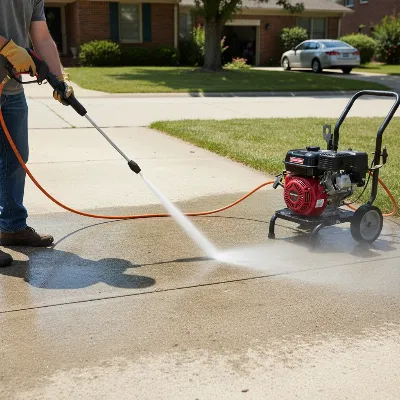 Craftsman 3000 PSI Gas Pressure Washer effectively cleaning a dirty driveway.
Performance and Usability
The Craftsman 3000 PSI Gas Pressure Washer generally receives positive feedback for its performance, especially for residential tasks. It effectively tackles accumulated dirt, grime, and stains on driveways, sidewalks, and patios. Reviewers frequently highlight its capability to remove old paint and clean dirty vehicles with satisfactory results. For siding and decks, the unit demonstrates solid cleaning power, making them look new again.
Starting the unit is typically straightforward, thanks to the recoil start and the low oil shutdown feature that ensures the engine’s protection. The 12-inch never-flat wheels and fold-down handle contribute to its ease of maneuverability and storage, making it practical for homeowners with limited garage space.
Pros and Cons
Like any tool, the Craftsman 3000 PSI Gas Pressure Washer has its strengths and weaknesses:
Pros:
- Strong Cleaning Power: 3000 PSI and 2.3 GPM combination provides excellent cleaning performance for most residential tasks.
- Reliable Engine: The Craftsman 163cc engine (or Briggs & Stratton variant) is noted for its dependable operation and includes protective features like low oil shutdown.
- Versatile Nozzles: Four quick-connect tips offer flexibility for various cleaning needs.
- Durable Construction: Steel frame and axial cam pump contribute to the machine’s robust build and longevity.
- Easy to Maneuver and Store: Never-flat wheels and a fold-down handle enhance portability and compact storage.
Cons:
- Hose Length: The standard 25-foot hose can be limiting for larger properties, often requiring the user to move the unit frequently.
- Accessory Quality: Some users occasionally find the quality of the stock hose and spray wand to be less durable than desired, suggesting potential upgrades for heavy use.
- Heat Generation: Prolonged, continuous use can cause the engine to get quite hot, which might be a concern for very extensive projects.
- Not Commercial Grade: While powerful for home use, it’s not designed for continuous commercial-grade work.
Buying Guide: Choosing the Right Pressure Washer
Selecting the perfect pressure washer requires careful consideration of your specific cleaning requirements and understanding the key specifications.
Assess Your Needs
Before purchasing any pressure washer, consider what you’ll primarily use it for and how often.
- Purpose: Are you mainly washing your car, cleaning a small patio, tackling stubborn stains on a large driveway, or preparing your house for painting? Different tasks demand different levels of power.
- Frequency: Will you use it weekly, seasonally, or only a few times a year? Frequent heavy use might warrant a more robust, higher-end model.
- Budget: Pressure washers range widely in price. Establishing a budget early on will help narrow down your options, allowing you to prioritize features that matter most.
Key Factors to Consider
Once you understand your needs, evaluate these critical specifications:
- Pressure (PSI) and Flow Rate (GPM): PSI (Pounds per Square Inch) indicates the force of the water spray, while GPM (Gallons Per Minute) measures the volume of water delivered. For effective cleaning, GPM is often considered more important by professionals, as moving more water translates to faster and more thorough rinsing, especially with cleaning solutions. A higher cleaning unit (PSI x GPM) signifies greater overall cleaning power. For example, 3000 PSI at 2.3 GPM is excellent for most residential tasks.
- Engine Type (Gas vs. Electric): Electric pressure washers are quieter, require less maintenance, and are suitable for lighter tasks around the home. Gas pressure washers, like the Craftsman 3000 PSI, offer more power, greater portability, and are ideal for tougher, larger jobs where power outlets might not be readily available. The engine’s cubic centimeters (cc) indicates its power; a higher cc generally means a more powerful engine.
- Pump Type: The pump is the heart of the pressure washer. Axial cam pumps are common in consumer-grade models, offering good performance and being relatively maintenance-free. Triplex pumps, found in higher-end or commercial units, are more durable and can withstand longer periods of use.
- Hose Length and Quality: A longer hose (50 feet or more) provides greater reach and reduces the need to constantly move the unit, saving time and effort. High-quality, non-marring, and abrasion-resistant hoses are essential for durability and protecting surfaces.
- Nozzle Options: Quick-connect nozzles with various spray patterns (0°, 15°, 25°, 40°, and soap) enhance versatility, allowing you to adapt the spray for different cleaning tasks without damaging delicate surfaces.
- Portability and Storage: Consider the unit’s weight, the presence of never-flat wheels, and a fold-down handle for ease of transportation and compact storage, especially if space is limited.
Price Segmentation and Competitors
The Craftsman 3000 PSI Gas Pressure Washer typically falls into the mid-range category for gas-powered units, offering a balance of performance and affordability for homeowners. While specific pricing can vary, similar models with 3000 PSI and around 2.3 GPM from other reputable brands like Ryobi, Simpson, and Generac also populate this segment. High-end gas pressure washers, often featuring higher PSI (e.g., 3500-4000 PSI) and GPM (3.0 GPM+), along with more robust triplex pumps and Honda engines, exist in a higher price bracket, targeting commercial users or homeowners with exceptionally demanding tasks. These premium models generally offer superior durability and features designed for extended, heavy-duty operation.
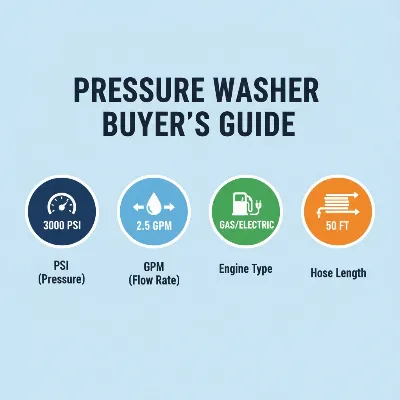 Key factors to consider when buying a pressure washer including PSI, GPM, engine type, and hose length.
Top Picks – Alternatives and Comparisons
While this article focuses on the Craftsman 3000 PSI, it’s helpful to consider its standing relative to other types of pressure washers.
Mid-Range Electric Pressure Washer (e.g., Greenworks GPW2000)
- Pros: Quieter, no gas/oil maintenance, lighter, often more affordable. Suitable for lighter tasks like cleaning patio furniture, cars, or small decks.
- Cons: Less powerful (typically 1500-2200 PSI, 1.2-1.4 GPM), limited by cord length and power outlet availability. Not ideal for heavy-duty driveway cleaning or large areas.
- Target User: Homeowners with smaller cleaning needs or those who prefer electric convenience.
High-End Gas Pressure Washer (e.g., Simpson PowerShot 3600 PSI)
- Pros: Significantly higher power (3500+ PSI, 2.5-3.0+ GPM), often with more durable components like triplex pumps and commercial-grade engines (e.g., Honda GX series). Excellent for large properties, heavy machinery, and continuous professional use.
- Cons: Much more expensive, heavier, louder, requires more maintenance.
- Target User: Professionals, landowners with extensive cleaning requirements, or serious DIYers who demand maximum power and durability.
The Craftsman 3000 PSI sits comfortably in the middle, offering a sweet spot for many homeowners by providing substantial power for typical residential challenges without the commercial-grade price tag or the limitations of an electric unit.
Bảng So Sánh Các Máy Rửa Xe Áp Lực (Comparison Table)
| Feature | Craftsman 3000 PSI Gas Pressure Washer | Mid-Range Electric (e.g., 2000 PSI) | High-End Gas (e.g., 3500 PSI) |
|---|---|---|---|
| Max Pressure (PSI) | 3000 | ~2000 | ~3500 |
| Flow Rate (GPM) | 2.3 | ~1.4 | ~3.0 |
| Engine Type | Gas (Craftsman 163cc/Briggs 208cc) | Electric | Gas (e.g., Honda GX) |
| Pump Type | Axial Cam | Axial Cam | Triplex |
| Hose Length | 25 ft (upgradeable) | 20-25 ft | 50 ft+ |
| Portability | Good (12″ wheels) | Very good (lighter) | Good (heavy duty wheels) |
| Maintenance | Moderate (oil, fuel, pump saver) | Low | High (more complex engine) |
| Typical Use | Residential, heavy-duty home cleaning | Light residential, car, patio | Commercial, large estates |
| Price Point | Mid-range | Low-mid range | High-end |
Maintenance and Troubleshooting for Gas Pressure Washers
Proper care and maintenance are crucial for extending the lifespan and ensuring the optimal performance of your gas pressure washer.
Hướng Dẫn Sử Dụng An Toàn (Safety Guidelines)
Operating a pressure washer requires adherence to safety precautions to prevent injuries and damage.
- Read the Manual: Always familiarize yourself with your specific model’s operation and safety guidelines before first use.
- Wear Protective Gear: Always wear eye protection (safety goggles), hearing protection, and sturdy closed-toe shoes. Gloves are also recommended.
- Proper Setup: Ensure all connections are secure, and the water supply is fully open before starting the engine. Never run the pump dry.
- Maintain Control: The high-pressure spray can cause kickback. Maintain a firm grip on the spray gun with both hands.
- Keep Distance: Keep people, pets, and delicate objects clear of the spray area. Avoid spraying electrical outlets or fragile surfaces.
- Ventilation: Operate gas pressure washers in well-ventilated outdoor areas to prevent carbon monoxide poisoning.
Hướng Dẫn Vệ Sinh và Bảo Dưỡng (Regular Maintenance)
Consistent maintenance will keep your pressure washer running smoothly for years.
- After Each Use: Flush the pump with clean water to remove any detergent residue. Briefly run pump saver solution through the pump, especially before long-term storage, to lubricate and protect internal components from corrosion and freezing.
- Oil Changes: Change the engine oil regularly. For light use, an annual oil change is usually sufficient. For heavy or frequent use, consider changing the oil 2-3 times a year. Always use the manufacturer-recommended oil type.
- Fuel System Care: Use fresh, stabilized gasoline. For seasonal storage, it’s best to drain the fuel tank and run the engine until it stops, or use a fuel stabilizer to prevent fuel degradation and carburetor clogging.
- Air Filter: Inspect and clean or replace the air filter regularly, especially in dusty conditions, to ensure optimal engine performance.
- Spark Plug: Check and replace the spark plug as needed to ensure easy starting and efficient combustion.
- Nozzle Cleaning: Keep quick-connect nozzles clean and free of debris to maintain proper spray patterns and pressure. A clogged nozzle can cause pressure loss.
Common Issues and Fixes
Even with proper maintenance, issues can arise. Here are some common problems and their typical solutions:
- Pressure Washer Won’t Start:
- Low Oil: Many gas engines have a low oil shutdown sensor. Check the oil level and add if necessary.
- Fuel Issues: Ensure the fuel tank has fresh gasoline. Old or stale fuel can clog the carburetor. Try spraying a small amount of brake cleaner into the carburetor to see if it starts; if it does, it’s a fuel-related issue.
- Clogged Carburetor: Disassemble and clean the carburetor (especially the bowl and jets) or replace it.
- Spark Plug: Check if the spark plug is fouled or damaged. Clean or replace it.
- Pressure Washer Starts Then Stalls:
- Clogged Carburetor: Often caused by stale fuel. Clean or rebuild the carburetor.
- Clogged Fuel Filter: Replace the fuel filter if it’s impeding fuel flow.
- Clogged Air Filter: A dirty air filter restricts airflow. Clean or replace it.
- Clogged Fuel Cap Vent: A clogged vent can create a vacuum (vapor lock) in the fuel tank, stopping fuel flow. Try loosening the fuel cap slightly; if the engine continues to run, the vent needs cleaning or the cap needs replacement.
- Pressure Washer Has No Pressure:
- Clogged Nozzle: Ensure the nozzle is clean and free of obstructions.
- Air in Pump: Make sure the water supply hose is connected properly and there’s no air trapped in the system.
- Unloader Valve Issue: The unloader valve may need adjustment or replacement if it’s not properly bypassing water when the trigger is released.
- Pump Damage: Internal pump components (seals, valves) may be worn or damaged.
- Pressure Washer Leaking Water:
- Loose Connections: Check all hose and nozzle connections and tighten them.
- Thermal Relief Valve: If water is leaking from the thermal relief valve, it might indicate the pump is overheating, or the valve itself is faulty. Ensure adequate water flow to the pump.
- Worn Seals: Internal pump seals can wear out over time, leading to leaks.
Conclusion
The Craftsman 3000 PSI Gas Pressure Washer offers a compelling blend of power, reliability, and features that make it an excellent choice for homeowners serious about tackling outdoor cleaning projects. Its 3000 PSI and 2.3 GPM output, coupled with a dependable engine and versatile nozzle options, provide the muscle needed for anything from refreshing your driveway to deep-cleaning your siding. While some minor considerations exist, such as the standard hose length, its overall performance and user-friendly design make it a standout in its class. For those seeking a robust gas pressure washer that delivers consistent results without breaking the bank, the Craftsman 3000 PSI is undoubtedly worth considering. What will be the first big cleaning project you tackle with this powerful machine?
Frequently Asked Questions
How long can I continuously run a Craftsman 3000 PSI Gas Pressure Washer?
While a Craftsman 3000 PSI gas pressure washer is designed for residential heavy-duty tasks, continuous run times should be managed. It’s generally recommended to allow the machine to cool down after 1-2 hours of continuous use to prevent overheating, especially of the engine and pump. Prolonged use without breaks can reduce the lifespan of components.
Can I use the Craftsman 3000 PSI pressure washer for commercial work?
The Craftsman 3000 PSI Gas Pressure Washer is primarily designed and rated for residential use. While it offers excellent power for home projects, it may not withstand the demands of continuous, all-day commercial operations. Commercial-grade pressure washers typically feature more robust engines, triplex pumps, and heavier-duty components built for extended daily use.
What kind of fuel and oil should I use for my Craftsman gas pressure washer?
Always refer to your specific model’s owner’s manual for exact recommendations. Generally, gas pressure washers require fresh, unleaded gasoline with an octane rating of 87 or higher. For engine oil, a high-quality SAE 10W-30 or 5W-30 motor oil is commonly recommended, often a synthetic blend, to ensure optimal engine lubrication and performance.
Is the 25-foot hose long enough for most household tasks?
For many smaller tasks like washing a car or a small patio, a 25-foot hose can be sufficient. However, for larger areas such as long driveways, extensive siding, or spacious decks, a 25-foot hose often requires frequent repositioning of the pressure washer unit. Many users opt to upgrade to a 50-foot or even 100-foot high-pressure hose for greater convenience and efficiency on bigger jobs.
How do I prevent my gas pressure washer from losing pressure?
To prevent pressure loss, ensure your water supply is fully open and free of kinks, check that the inlet filter is clean, and use the correct quick-connect nozzle for the task without any clogs. Air trapped in the pump can also cause pressure issues, so ensure proper purging before use. Regular maintenance and proper storage with pump saver are also key.
What does “axial cam pump with thermal relief” mean?
An axial cam pump is a common type of pump used in consumer-grade pressure washers, known for its reliability and compact design. “Thermal relief” refers to a safety feature built into the pump. If the water inside the pump gets too hot (e.g., when the machine runs for an extended period without the trigger being pulled), the thermal relief valve will open to release the hot water and draw in cooler water, protecting the pump from heat damage.
Get our weekly buyer guide
Practical specs, not advice. Unsubscribe anytime.
