Transforming your car from grimy to gleaming doesn’t have to be a professional-only endeavor. For many automotive enthusiasts, a portable pressure washer is an essential tool, offering the power and precision needed to achieve a showroom shine right in your driveway. But with countless models on the market, choosing the right one for car detailing can be overwhelming. This comprehensive guide, crafted by an expert with over a decade of experience, will navigate you through the world of portable pressure washers, ensuring you select a unit that’s perfectly suited for pampering your vehicle.
Overview of Pressure Washers
A pressure washer, often called a power washer, is a high-pressure mechanical sprayer used to remove loose paint, mold, grime, dust, mud, and dirt from surfaces and objects such as buildings, vehicles, concrete surfaces, and more. It works by accelerating water to very high speeds, creating a concentrated stream that blasts away contaminants. While widely used for heavy-duty tasks like cleaning driveways or siding, specific types are perfectly engineered for the delicate yet effective cleaning required for car detailing.
Historically, pressure washers have evolved from basic industrial tools to sophisticated consumer models, offering a range of power sources and designs. For car detailing, the focus has shifted towards electric and increasingly portable, often cordless, units. These advancements provide a balance of adequate cleaning power without the risk of damaging a vehicle’s paintwork, a common concern with overly powerful machines. The market now offers various types, from compact electric models ideal for home use to highly mobile, battery-powered options perfect for detailers on the go or those with limited access to power outlets.
Buying Guide for Portable Pressure Washers
Selecting the ideal portable pressure washer for car detailing requires careful consideration of your specific needs and several key technical specifications. It’s about finding a balance between power, portability, and protective features for your vehicle.
Determining Your Usage Needs
Before diving into specifications, clarify what you need your pressure washer to do. Are you primarily washing your personal car weekly, or do you detail multiple vehicles professionally? Your primary use will influence the necessary power, durability, and features. Consider how often you’ll use it – frequent use might warrant a more robust and durable model, while occasional use can be satisfied by a more budget-friendly option. Your budget is also a critical factor, as prices can vary significantly based on power, brand, and included accessories.
Key Factors to Consider
Several technical specifications are paramount when choosing a pressure washer for car detailing:
- Water Pressure (PSI): For car detailing, a pressure range of 1500 to 2000 PSI is generally considered safe and effective. Anything significantly higher, like the 3000 PSI found in some gas models, can strip wax, damage clear coats, or even peel paint. Look for models with adjustable pressure settings or specific car-friendly nozzles.
- Water Flow Rate (GPM): Gallons Per Minute (GPM) indicates how much water the pressure washer delivers. A higher GPM (around 1.2 GPM or more) means quicker rinsing and more efficient cleaning, as it helps carry away dirt and soap more effectively.
- Engine Type (Electric vs. Gas): For car detailing, electric pressure washers are almost always preferred. They are quieter, produce no fumes, require less maintenance, and typically operate within the safe PSI range for vehicles. Gas models, while offering more power, are often too aggressive for car paint and are louder and heavier. Cordless electric models offer maximum portability and convenience.
- Size and Weight: Since “portable” is key, consider the physical dimensions and weight. Lightweight, compact units with wheels or a handgun-like design are ideal for maneuverability around a vehicle and easy storage. Cordless options are inherently more portable as they eliminate the need for a power outlet.
- Additional Features:
- Nozzle Attachments: Look for quick-connect nozzles, especially a 40-degree white tip for general car washing and a black soap nozzle for detergent application. Some models include a turbo nozzle, but this is usually too powerful for car paint.
- Detergent Tank/Foam Cannon Compatibility: An onboard detergent tank or the ability to connect a foam cannon is crucial for pre-soaking and applying car wash soap evenly, which significantly enhances the cleaning process and protects the paint.
- Hose and Cord Length: A longer high-pressure hose (20-25 feet) and power cord (35 feet for electric models) provide greater reach and flexibility, allowing you to move freely around your vehicle without constantly repositioning the unit.
Brands and Reviews
Reputable brands in the pressure washer market often offer models suitable for car detailing. Brands like Westinghouse, Greenworks, Sun Joe, Kärcher, Craftsman, Ryobi, Worx, and Fanttik are frequently mentioned in top review lists. Always read user reviews and comparative analyses to gauge real-world performance, durability, and common issues. Pay attention to feedback regarding ease of use, noise levels, and customer support.
Price Segments of Portable Pressure Washers
Portable pressure washers for car detailing come in various price points, each offering a different balance of performance, features, and durability. Understanding these segments can help align your budget with your expectations.
Budget-Friendly Segment (Below $150)
- Advantages: These models are highly affordable, making them excellent for occasional users or those new to pressure washing. They typically offer sufficient pressure for basic car washing and light household cleaning.
- Disadvantages: Often feature lower PSI and GPM ratings, potentially leading to slower cleaning times. Durability might be a concern with frequent, heavy use, and they may have fewer accessories or shorter hoses.
- Example Products: Entry-level Sun Joe SPX series, some Kärcher K-series models.
Mid-Range Segment ($150 – $350)
- Advantages: This segment offers a significant leap in performance and features. You’ll find better build quality, higher PSI and GPM ratings suitable for more thorough car detailing, and more robust accessories. Many popular electric models fall into this category, balancing power with portability and reliability.
- Disadvantages: While offering good value, some might still lack the extreme durability or advanced features of professional-grade units.
- Example Products: Westinghouse ePX3500, Greenworks 2000-2500 PSI models, Craftsman CMEPW2100.
Premium Segment (Above $350)
- Advantages: These pressure washers boast top-tier performance, exceptional durability, and a wealth of advanced features. This segment often includes the most portable and innovative cordless options, providing unmatched convenience and professional-grade cleaning power. They are built for frequent use and demanding tasks.
- Disadvantages: The primary drawback is the higher initial investment.
- Example Products: Fanttik NB8 Ultra Cordless, Worx Hydroshot, high-end Ryobi cordless power washers, Chemical Guys ProFlow PM2000.
Top Picks – Reviewing the Best Portable Pressure Washers
Finding the perfect portable pressure washer for your car detailing needs means looking at specific models that stand out for their performance, features, and user satisfaction. Here are a few top contenders that consistently receive high marks from users and experts alike.
Westinghouse ePX3500 Electric Pressure Washer
The Westinghouse ePX3500 is a popular choice, lauded for its balance of power and user-friendliness, making it excellent for car detailing beginners or those seeking a reliable all-rounder.
- Pros: It boasts 2,500 Max PSI and a 1.76 Max GPM, providing ample power for effective cleaning without being overly aggressive for car surfaces. Users appreciate its quiet operation and maneuverability, facilitated by a platform-style base with four wheels. It comes with five nozzle attachments, including a soap tank, and has a 25-foot hose and 35-foot power cord for excellent reach. It’s also relatively lightweight at 20.9 pounds.
- Cons: Some users might find the maximum PSI slightly higher than strictly necessary for delicate car finishes if not used carefully with appropriate nozzles.
- Best For: First-time pressure washer owners, those needing a versatile unit for both car detailing and general household cleaning, and users who value quiet operation and ease of movement.
Greenworks GPW2000-1RG Electric Pressure Washer
Greenworks consistently delivers reliable electric pressure washers, and the GPW2000-1RG is often highlighted as a strong all-around performer for car detailers.
- Pros: This model typically offers around 2,000 PSI and a flow rate of 1.2 GPM, striking an ideal balance for safe yet effective car washing. It features a 25-foot kink-resistant hose and a 35-foot power cord with GFCI. Its sturdy design and ease of assembly make it a user favorite, providing robust power for its size.
- Cons: While highly effective, some users might find it a bit bulkier than truly compact options.
- Best For: Car enthusiasts seeking a dedicated electric pressure washer with proven reliability and sufficient power for thorough detailing, offering great value for money.
Fanttik NB8 Ultra Cordless Pressure Washer
For those prioritizing ultimate portability and flexibility, the Fanttik NB8 Ultra Cordless stands out as an excellent choice, freeing you from power outlets.
- Pros: This unit offers true flexibility with its cordless design, making it perfect for situations with limited water or power access. It’s lightweight and easy to maneuver, providing convenient cleaning anywhere. Its ability to draw water from various sources (like a bucket) is a significant advantage for mobile detailing or remote locations.
- Cons: Cordless units typically have lower PSI compared to corded electric models and battery life can be a limiting factor for extended detailing sessions. The higher price point reflects its advanced cordless technology.
- Best For: Mobile detailers, users with limited outdoor power access, or anyone who values the convenience of a completely portable, grab-and-go washing solution.
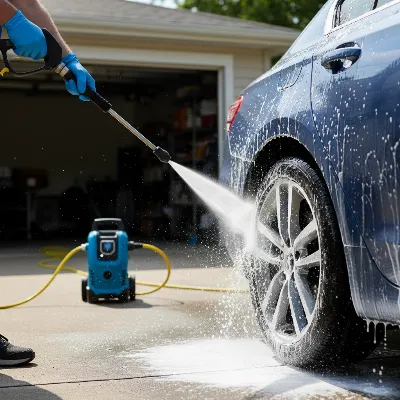 A portable pressure washer being used to clean a car, focusing on a wheel, with suds and water spray.
Comparison Table: Top Portable Pressure Washers for Car Detailing
To help you make an informed decision, here’s a comparison of some of the leading portable pressure washers suitable for car detailing:
| Feature | Westinghouse ePX3500 | Greenworks GPW2000-1RG | Fanttik NB8 Ultra Cordless |
|---|---|---|---|
| Max PSI | 2,500 PSI | 2,000 PSI | Lower (cordless typical) |
| Max GPM | 1.76 GPM | 1.2 GPM | Variable (cordless typical) |
| Motor Type | Electric (Corded) | Electric (Corded) | Electric (Cordless/Battery) |
| Weight | 20.9 lbs | ~24 lbs | Very Lightweight |
| Hose Length | 25 ft | 25 ft | Variable (often shorter) |
| Power Cord | 35 ft | 35 ft | N/A (Battery Powered) |
| Portability | Wheels, relatively light | Wheels, good maneuverability | Extremely portable, no cords |
| Soap System | Onboard detergent tank, 5 nozzles | Onboard detergent tank, multiple nozzles | Foam cannon compatible |
| Price Segment | Mid-Range | Mid-Range | Premium |
| Best For | Beginners, versatile use, quiet | Reliable power, great value | Ultimate mobility, remote use |
Guide to Using and Maintaining Your Portable Pressure Washer
Proper use and regular maintenance are crucial for maximizing the effectiveness and extending the lifespan of your portable pressure washer, especially when detailing your cherished vehicle.
Safe Usage Instructions
Operating a pressure washer requires adherence to safety guidelines to prevent injury and damage. Always wear appropriate personal protective equipment, including safety glasses, closed-toe shoes, and hearing protection. Never point the nozzle at people, pets, or electrical outlets. Ensure all connections—water supply, high-pressure hose, and power cord (if electric)—are secure before turning on the unit. When washing your car, maintain a safe distance (typically 12-18 inches) from the vehicle surface and use a wide-angle nozzle (like a 40-degree or soap nozzle) to avoid concentrating too much pressure on one spot, which could damage paint or trim. Start with lower pressure and gradually increase if needed. Always start spraying away from the vehicle before directing the stream onto the car.
To set up, connect your garden hose to the pressure washer’s inlet, then attach the high-pressure hose to the outlet. Plug in the power cord to a GFCI-protected outlet if it’s an electric model. Select the appropriate nozzle and ensure it’s securely attached to the wand. Turn on the water supply fully before switching on the pressure washer. This prevents damage to the pump.
Cleaning and Maintenance Guide
After each use, flush the system by disconnecting the detergent tank (if applicable) and running clean water through the pressure washer for a few minutes. This removes any residual soap or chemicals that could corroge internal components. Turn off the machine, then the water supply, and relieve any remaining pressure in the hose by squeezing the trigger. Drain all water from the pump, hose, and wand, especially before storing in freezing temperatures, to prevent internal damage.
Regular maintenance includes checking nozzles for clogs and cleaning them with the provided nozzle cleaning tool. Inspect hoses and connections for leaks or damage and replace them if necessary. For electric models, ensure the power cord is free from cuts or fraying. Store your pressure washer in a dry, protected area. Occasionally, you may need to check the pump’s oil (if applicable to your model) and replace it according to the manufacturer’s recommendations. Adhering to these simple steps will ensure your portable pressure washer remains a reliable tool for years to come. Common issues like reduced pressure often stem from clogged nozzles or air in the pump, which can usually be fixed with basic troubleshooting.
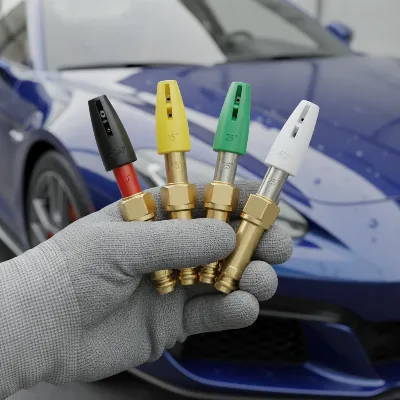 Close-up of a hand selecting different colored quick-connect nozzles for a pressure washer, with a blurred car in the background.
Conclusion
Choosing the best portable pressure washer for car detailing means empowering yourself with the right tool to keep your vehicle in pristine condition. We’ve explored how crucial factors like PSI, GPM, and motor type contribute to both effective cleaning and the safety of your car’s finish. From robust corded electric models like the Westinghouse ePX3500 and Greenworks GPW2000-1RG to the unparalleled freedom offered by cordless options such as the Fanttik NB8 Ultra, there’s a perfect pressure washer to match every detailer’s needs and budget. Remember, safe operation and diligent maintenance are key to harnessing the full potential of your machine and ensuring a sparkling clean car every time.
What unique features do you prioritize in a portable pressure washer for your car detailing routine?
Frequently Asked Questions
What PSI is safe for washing a car with a pressure washer?
For car washing, a pressure washer with a PSI range of 1500 to 2000 is generally considered safe and effective. Pressures higher than this can potentially damage paint, clear coats, or delicate trim, so it’s crucial to use the appropriate nozzle and maintain a safe distance from the vehicle’s surface.
Are cordless pressure washers powerful enough for car detailing?
Yes, many cordless pressure washers are powerful enough for car detailing, especially for light to moderate dirt and maintenance washes. While they might have lower PSI than corded electric models, their convenience and ability to draw water from a bucket make them excellent for mobile detailing or areas without power access.
What’s the difference between GPM and PSI for car washing?
PSI (Pounds per Square Inch) measures the force of the water spray, indicating its cleaning power. GPM (Gallons Per Minute) measures the volume of water flowing through the washer, impacting how quickly you can rinse away dirt and soap. For cars, a balance of sufficient PSI (1500-2000) and a good GPM (1.2+) is ideal for effective and safe cleaning.
Can I use a gas pressure washer for car detailing?
While gas pressure washers offer high power, they are generally not recommended for car detailing. Their high PSI (often 3000+) can easily damage a car’s paint and finish. They are also louder, heavier, and produce fumes, making electric or cordless electric models a much safer and more pleasant choice for vehicle cleaning.
Get our weekly buyer guide
Practical specs, not advice. Unsubscribe anytime.
